

22 important SEO KPIs to set and Track in 2025 (Must-Read!)

In digital marketing, SEO KPIs are the heartbeat of success, helping businesses measure performance and align strategies with goals. From tracking keyword rankings to analyzing conversion rates, these SEO KPIs provide critical insights that drive smarter decisions in a fast-changing market. But what exactly should you track, and how can these metrics transform your SEO game?
Understanding SEO KPIs
Finding and evaluating the appropriate key performance indicators, or SEO KPIs, is essential to developing effective SEO strategies and assessing the effectiveness of your SEO initiatives.
Definition of SEO KPIs
SEO KPIs are quantifiable metrics that reflect the performance and outcome of your SEO activities. These indicators help you to understand the impact of your SEO work on your business objectives. For instance, if your goal is to increase organic traffic, a relevant KPI would be the number of users visiting your site through search engines over a given period.
Importance of Tracking KPIs
Tracking these SEO KPIs is crucial because it allows you to review and refine your strategy to better align with your business goals. By keeping a close eye on metrics like conversion rate or click-through rate, you can evaluate whether your SEO tactics are contributing to your business’s bottom line.
22 SEO KPIs You Should Know
Understanding SEO KPIs is essential for evaluating the performance of your website and aligning your efforts with your goals. Below, we’ve compiled key SEO metrics in a detailed table to simplify how you track and analyze them effectively.
| SEO KPI | Definition | Why It Matters | How to Track It |
|---|---|---|---|
| Click-Through Rate (CTR) | The percentage of users who click on your link after seeing it in search results. | Indicates how appealing your meta titles and descriptions are. | Google Search Console, Google Analytics |
| Keyword Ranking | The position of your website for specific search queries on search engines. | Shows how well your content matches user intent. | Ahrefs, SEMrush, Google Search Console |
| Conversion Rate | The percentage of visitors who complete a desired action on your site. | Reflects how effectively your site drives valuable user actions. | Google Analytics, CRM systems |
| Bounce Rate | The percentage of visitors who leave your site after viewing only one page. | High rates may indicate poor user experience or irrelevant content. | Google Analytics |
| Organic Traffic | The number of visitors coming to your site from unpaid search results. | Measures your website’s visibility and content quality in search engines. | Google Analytics, Ahrefs |
| Domain Authority (DA) | A score predicting a site’s ability to rank on search engines (1-100). | Higher DA correlates with better ranking potential. | Moz, Ahrefs |
| Search Visibility | The percentage of clicks your site receives compared to potential clicks. | Helps gauge your overall ranking performance in search engines. | SEMrush, Ahrefs |
| SEO ROI | Return on investment for your SEO efforts. | Determines the financial success of your SEO strategies. | Manual calculation using revenue and costs |
| Backlink Metrics | The number and quality of links pointing to your website. | Strong backlinks improve authority and ranking potential. | Ahrefs, Moz, SEMrush |
| Number of Indexed Pages | Total pages indexed by search engines. | Helps ensure all valuable content is discoverable by users. | Google Search Console |
| Health Score | Measures the overall technical health of your website. | Vital for identifying issues that impact performance and user experience. | Ahrefs, Screaming Frog |
| Domain Rating (DR) | A metric predicting the authority of your domain based on backlinks. | Higher DR often leads to improved search rankings. | Ahrefs |
| User Engagement | Interactions like clicks, shares, and comments on your website. | Indicates how compelling and relevant your content is to users. | Google Analytics, Hotjar |
| Dwell Time | The time a user spends on your page after clicking from search results. | Higher dwell time shows user satisfaction with your content. | Google Analytics |
| Cost Per Acquisition (CPA) | The average cost to acquire a customer through SEO. | Essential for assessing the financial efficiency of your campaigns. | Manual calculation using ad spend and conversions |
| Google My Business Insights | Data about your business’s performance in local search results. | Critical for local businesses targeting nearby customers. | Google My Business Dashboard |
| Social Signals | Engagement metrics like shares and likes from social media platforms. | Reflects how well your content resonates with audiences socially. | Social media analytics tools |
| Core Web Vitals | Google metrics measuring page load time, interactivity, and visual stability. | Directly impacts user experience and rankings. | Google Search Console, Lighthouse |
| Cost Per Conversion | The cost incurred for each conversion event achieved. | Helps identify whether SEO campaigns are cost-effective. | Google Ads, Google Analytics |
| Time on Page | The average time visitors spend on a single page. | Indicates content quality and relevance to user intent. | Google Analytics |
| Impressions | The total number of times your site appears in search results. | Shows how often your content is visible in search engines. | Google Search Console |
| Average Position | The average ranking position of your site for a set of keywords. | Helps identify how your website is performing overall in search rankings. | Google Search Console, SEMrush |
Tracking these SEO KPIs ensures you have a clear picture of your website’s performance and areas for improvement. By consistently monitoring these metrics, you can refine your SEO strategies and achieve long-term success.

Key SEO Metrics to Track
Click-Through Rate (CTR)
Click-Through Rate (CTR) is the percentage of users who click on your link after seeing it in search results. It reflects how compelling your meta title and description are in attracting clicks. A higher CTR often indicates that your content is relevant and appealing to the target audience.
Why and How To Track It?
CTR matters because it directly impacts your website’s traffic and signals to search engines that your content is relevant to users’ queries, which can improve rankings. Tracking it is simple with tools like Google Search Console and Google Analytics, which provide insights into how well your pages perform in search results.
To do this, head over to Google Search Console and click on the “Performance” tab, then select “Search results” to get started.

Keyword Ranking
Keyword ranking refers to your website’s position in search engine results pages (SERPs) for a specific search term. It shows how visible your content is to users searching for related topics.
Why and How to Track it?
Tracking keyword rankings is essential to understand how well your content performs in search results and to find opportunities to improve visibility. Higher rankings mean better exposure, more clicks, and ultimately more traffic to your website.
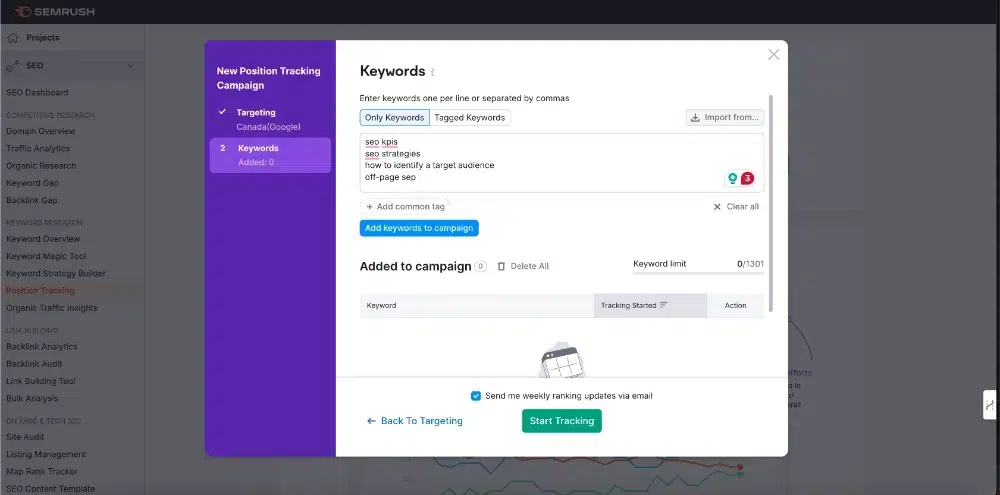
To track keyword rankings, use a tool like SEMrush Position Tracking. Simply enter your website and target keywords into the tool, and it will show you your rankings, track changes over time, and identify new opportunities to rank higher in SERPs.
Conversion Rate
Conversion rate is the percentage of website visitors who complete a desired action, like making a purchase or signing up for a newsletter.
- It’s calculated using the formula: (Conversions ÷ Total Visitors) × 100.
For example, if 50 out of 500 visitors convert, your conversion rate is 10%.
Why and How to Track it?
Tracking your conversion rate is crucial for understanding how effectively your website turns visitors into customers or leads. A high conversion rate indicates that your site meets user needs, while a low rate highlights areas for improvement.
To track it, use tools like Google Analytics. Set up goals or events to monitor specific actions, such as purchases or sign-ups, and regularly analyze the data to optimize your website for better performance.
Need a Digital Solution?
Get in contact now with Experts!
We answer calls 24/7!
Organic Traffic
Organic traffic refers to the visitors who land on your website through unpaid search results. It’s a key indicator of how well your content ranks and attracts users without relying on paid ads.
Why and How to Track it?
Tracking organic traffic is essential to measure the effectiveness of your SEO efforts and identify opportunities to attract more visitors. It shows how well your site ranks for relevant keywords and how users engage with your content.
To track organic traffic using Google Search Console, open the “Performance” report and review metrics like total clicks, impressions, and top-performing queries.

Backlink Metrics
Backlink metrics track the quality and quantity of links pointing to your website, which directly impact your site’s authority and search rankings. Key metrics to monitor include the total number of backlinks, referring domains, backlinks earned, and backlinks lost. These insights help you evaluate your link-building efforts and maintain a strong backlink profile.
Why and How to Track it?
Backlink metrics are crucial for measuring your website’s authority and its ability to rank higher in search results. Tracking them helps you monitor the quality of your backlinks, identify opportunities for improvement, and address lost links that could impact rankings.
To track backlink metrics, use the SEMrush Backlink Analysis Tool. Simply enter your website, and the tool will provide a detailed report showing the total number of backlinks, referring domains, earned and lost backlinks, and more

Number of Indexed Pages
The number of indexed pages refers to how many of your website’s pages are recognized and stored by search engines. It’s important because only indexed pages can appear in search results, directly affecting your site’s visibility. Monitoring this ensures all valuable content is accessible to users and search engines.
How to Track it?
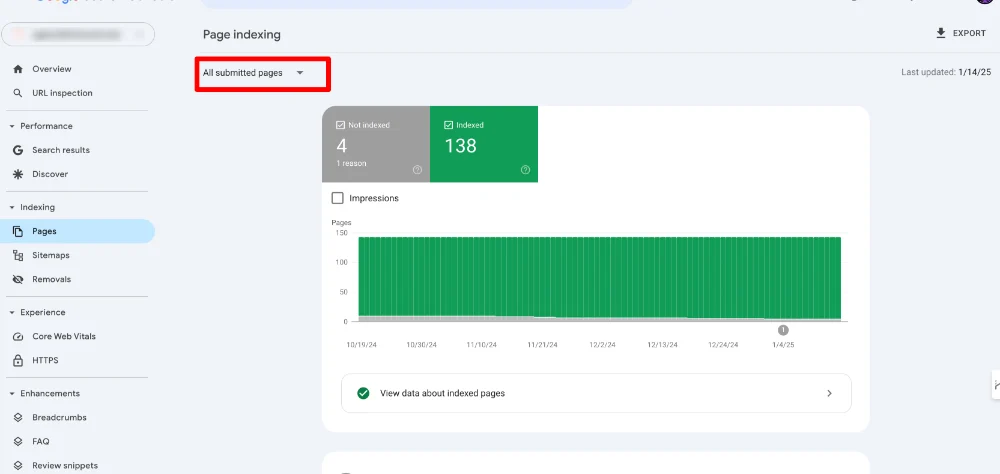
You can track the number of indexed pages using Google Search Console. Simply navigate to the “Pages” report, choose “all submitted pages” and there you’ll see the total number of valid pages indexed by Google. This helps you ensure your key content is discoverable in search results.
Domain Rating (DR)
Domain Rating (DR) is a metric that measures the strength of your website’s backlink profile on a scale from 0 to 100. A higher DR indicates a stronger, more authoritative website, which can improve your chances of ranking higher in search results. It’s a key factor in assessing your site’s overall SEO health.
Why and How to Track it?
To track your Domain Rating (DR) using Ahrefs, log in to your account and enter your website’s URL in the Site Explorer tool. Once the overview report loads, you’ll see your DR score prominently displayed. You can also explore details like referring domains, total backlinks, and their quality to understand what’s contributing to your DR.

Core Web Vitals
Core Web Vitals are a set of metrics that measure key aspects of user experience, including page load speed, interactivity, and visual stability. These metrics are critical for ensuring your website provides a smooth and engaging experience, which directly impacts search rankings and user satisfaction.
Why and How to Track it ?
Tracking Core Web Vitals is essential because they directly impact both user experience and search engine rankings. A well-performing site with fast loading, smooth interactivity, and stable visuals keeps users engaged and improves SEO.
To track Core Web Vitals using Google Search Console, follow these steps:
- Log in to your Google Search Console account.
- Navigate to the “Core Web Vitals” report under the “Experience” section.
- Review the performance metrics for both mobile and desktop versions of your site.
- Identify any flagged issues and refer to the provided suggestions for improvement.

Google My Business Insights
Google My Business (GMB) Insights shows you how people find and interact with your business online. It is one of the important SEO KPIs that highlights important stats like search queries, actions customers take, and how often you appear in local searches. These insights are super helpful for improving your local SEO and getting more customers through the door.
Why and how to Track it?
To track it, log in to your Google My Business account, go to the Insights tab, and review metrics like search queries, views, clicks, and customer actions. Regularly analyzing this data ensures your business stays visible and competitive in local search results.

SEO and Reputation Management
SEO and reputation management work together to shape how your brand is perceived online. By optimizing search rankings and managing online reviews, you can ensure positive content dominates search results. This builds trust, enhances credibility, and attracts more customers to your business.
Why and How to Track it?
To track it, use tools like Google Alerts to monitor brand mentions and SEMrush to track search rankings and online reviews. Regularly analyzing this data lets you stay ahead of any reputation issues and strengthen your brand’s online presence.
Identifying a Target Audience
Understanding how to identify a target audience is crucial for any marketing strategy, as it allows businesses to tailor their messaging and product offerings to the right demographic. Start by analyzing your product’s appeal and use market research and customer feedback to gather insights about potential consumers’ interests and needs. Utilize demographic data such as age, location, and income level to refine your target audience, ensuring your marketing efforts are directed effectively. But keep in mind to set good SEO KPIs as you start targeting these target audiences.
Frequently Asked Questions
Navigating through the complex world of SEO requires a solid understanding of Key Performance Indicators (KPIs). These metrics are crucial for assessing the efficacy of your SEO strategies and making informed decisions to enhance online visibility.
Which key performance indicators are essential for monitoring SEO success?
Organic traffic, search rankings, click-through rates (CTR), and backlink quality are pivotal KPIs for monitoring SEO success. They offer insights into your website’s performance in search engine result pages (SERPs).
What metrics should a SEO Manager analyze to gauge performance?
A SEO Manager should analyze metrics like bounce rates, conversion rates, page load time, and keyword rankings. These metrics provide a comprehensive view of both user engagement and the technical health of your site.
How does one effectively track and measure SEO results over time?
To effectively track and measure SEO results, one should use tools like Google Analytics to monitor traffic variations, set up conversion tracking, and review the progress of targeted keywords. Regular reporting and benchmarking against previous periods are also vital.
In terms of SEO, what does KPI stand for, and why is it important?
In SEO, KPI stands for Key Performance Indicator. It is important because it gives you quantifiable data points for evaluating the success of SEO campaigns against your specific objectives.
What are the primary differences between SEO KPIs and paid search KPIs?
SEO KPIs focus on long-term organic search performance, whereas paid search KPIs are centered around the efficiency and return of paid advertising efforts, like cost-per-click (CPC) and ad position.
Which content marketing KPIs can impact and reflect SEO performance?
Content marketing KPIs like organic content shares, engagement rates, and lead generation metrics can impact and reflect SEO performance as they indicate the relevance and value of your content to the target audience, which can also influence your search rankings.
Conclusion
SEO KPIs are indispensable tools for gauging the success and directing the strategy of your SEO campaigns. By carefully tracking and analyzing these KPIs, you not only ensure that your SEO efforts align with your business objectives, but you also gain critical insights for continuous improvement. Remember, the effectiveness of your digital marketing strategy hinges on how well you understand and leverage these SEO KPIs.
Need a Digital Solution?
Get in contact now with Experts!
We answer calls 24/7!


