

How to Do Competitor Analysis in SEO (2025’S New Method)

To master how to do a competitor analysis in SEO, start by identifying your competitors and analyzing their keywords, backlinks, and content strategies. This reveals opportunities to improve your own SEO and stand out in search results.
The goal isn’t to copy but to use these insights to craft a winning strategy. Curious about the key steps to get started? Keep reading!
Understanding a Competitor Analysis in SEO
Understanding how to do competitor analysis in SEO is a strategy that revolves around researching and understanding your competitors’ tactics and performance to refine your SEO efforts. This macro view provides invaluable insights to position your website within your niche strategically.
What is a competitor analysis in SEO?
A competitor analysis in SEO is the process of examining rival websites to understand their SEO strategies, including keywords, backlinks, and content performance. It helps identify their strengths and weaknesses, giving you insights to refine your own approach and improve your rankings. In the next sections, we will be showcasing all the aspects and steps to learn how to do competitor analysis in SEO.
Organic Competitors vs. Direct Competitors
Organic competitors are those that rank for the same keywords as you do in the SERPs, regardless of whether they offer the same products or services. These can differ greatly from your direct competitors, who are businesses offering similar products or services and target the same customer base. Your SEO strategy should account for both, as each can provide insights into content strategies, keyword opportunities, and areas for improvement.
Why is it important to do a competitor analysis in SEO
Understanding the importance of SEO competitor analysis is crucial. It allows you to:
- Discover gaps in your own SEO strategies by identifying the strengths and weaknesses of your competitors’ SEO efforts.
- Capitalize on opportunities in areas they might be overlooking, which could include certain keywords, content formats, or backlink strategies.
- Adjust your tactics based on data-driven insights to improve your overall search engine ranking and performance within your niche.

How to do a competitor analysis in SEO?
When you’re getting into SEO, recognizing who you’re up against in search engine results is essential. It’s not just about who you compete with directly in business but also which websites you’re vying with for that coveted search visibility. In the next sections, we will be learning how to do competitor analysis in SEO from “A” to “Z”
1. Defining your Competitors
The first step in learning how to do competitor analysis in SEO is defining who your competitors are. These are websites that rank higher than yours for the keywords you’re targeting, as they compete for the same audience and visibility. Here’s how you can identify them effectively:
1.1.1 Use Google Search
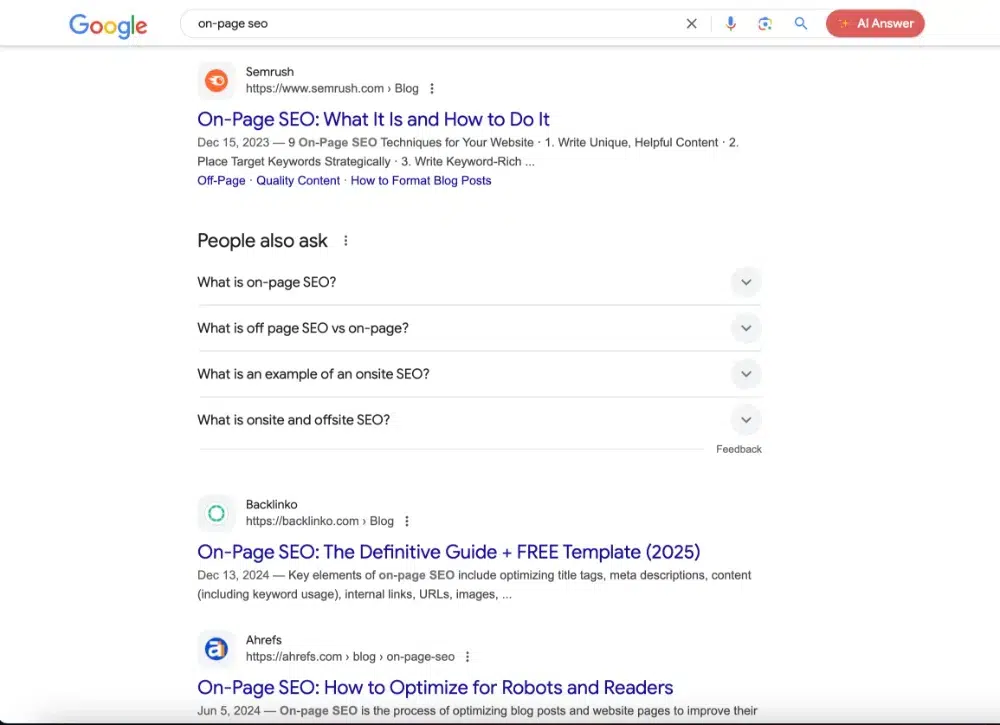
Start by searching your target keywords on Google and noting the top-ranking websites. These are likely your main competitors.
1.1.2 Use Semrush Organic Research Tool
Enter your domain in the tool and navigate to the “Competing Domains” section to see a list of websites competing for similar keywords.

1.1.3 Analyze SERP Features
Pay attention to websites appearing in featured snippets, local packs, and other SERP elements, as they often compete for visibility.

1.1.4 Identify Indirect Competitors
Look beyond direct competitors to include websites that attract the same audience, even if they offer different products or services.
To identify indirect competitors, follow these steps:
- Understand Your Audience: Think about the type of users you want to attract. What are their interests, pain points, and needs? Competitors may include sites catering to these interests even if they don’t directly compete with your product or service.
- Broaden Your Keyword Scope: Use tools like Ahrefs Keywords Explorer or Semrush Keyword magic tool to explore related keywords and phrases. Look at the websites ranking for these terms to spot potential indirect competitors.
- Research Content Similarities: Look for websites creating content similar to yours, even if their primary focus differs. For example, a fitness blog might indirectly compete with a nutrition website because they share an overlapping audience.
- Check Audience Overlap Tools: Use tools like SimilarWeb to see which websites share audience demographics with yours. These sites often qualify as indirect competitors.
- Examine Social Media and Forums: Explore communities, forums, or social media groups where your audience engages. Observe which brands or websites they mention as alternatives or additional resources.
2. Conduct Keyword Gaps Research
Keyword gap research is a crucial part of learning how to do competitor analysis in SEO. It helps you identify keywords your competitors rank for that you don’t, revealing opportunities to expand your reach. Using SEMrush’s Keyword Gap Tool, follow these steps:
- Access the Tool: Log in to your SEMrush account and navigate to the “Keyword Gap” tool under the Competitive Research section.
- Enter Domains: Add your domain and up to four competitor domains in the search fields. Click “Compare” to begin the analysis.
- Analyze the Overlap: Review the Venn diagram to see keyword overlaps and gaps between your site and your competitors’.
- Focus on “Missing” Keywords: Use the filter to view the “Missing” tab, which shows keywords your competitors rank for, but you don’t. These are potential opportunities for your SEO strategy.
- Prioritize High-Value Keywords: Sort the list by metrics like search volume, difficulty, and intent to focus on high-impact keywords that align with your business goals.
- Export and Plan: Export the data for further analysis, and incorporate these keywords into your content, on-page optimization, and overall SEO strategy.

3. Breakdown the Strengths and Weaknesses of Your Competitors
Understanding your competitors’ strengths and weaknesses is a key part of mastering how to do competitor analysis in SEO. This breakdown helps you uncover what’s working for them and where they’re falling short, so you can refine your own strategy. Here are the common strengths and weaknesses to analyze:
Strengths of Competitors
- Strong Backlink Profile: Competitors with many high-quality backlinks often rank higher due to their strong domain authority.
- High-Quality Content: Engaging, well-optimized, and user-focused content helps them attract and retain audiences.
- Keyword Optimization: Effective targeting of relevant, high-volume keywords ensures they capture organic traffic.
- Technical SEO Excellence: A fast, mobile-friendly website with strong technical SEO practices gives them an edge in user experience and rankings.
- Active Local SEO Efforts: Competitors that dominate local search results often optimize Google My Business and other local SEO factors effectively.
- Consistent Updates: Frequent content updates or new blog posts signal to search engines that the website is active and relevant.
Weaknesses of Competitors
- Low-Quality Content: Thin or outdated content can hurt their ability to engage users and rank well.
- Keyword Gaps: If they’re missing opportunities to target important keywords, it leaves space for you to fill in.
- Poor Technical SEO: Issues like slow page speed, broken links, or lack of mobile optimization can weaken their rankings.
- Weak Backlink Profile: A lack of authoritative or diverse backlinks can limit their domain authority and visibility.
- Limited Local SEO: If they don’t optimize for local keywords or neglect local listings, it’s a gap you can exploit.
- Ineffective Call-to-Actions (CTAs): Weak or unclear CTAs can lead to missed conversions, even if their traffic is high.
Need a Digital Solution?
Get in contact now with Experts!
We answer calls 24/7!
4. Analyze Your Competitor’s On-Page SEO Aspects
Examining your competitors’ on-page SEO is an important step in understanding how to do competitor analysis in SEO. This involves analyzing specific elements on their website that contribute to their rankings and user experience. Here are the key aspects to focus on:
1. Title Tags
- Look at the structure and keyword placement in their title tags.
- Are they using primary keywords effectively while keeping the titles engaging and under 60 characters?
2. Meta Descriptions
- Check if their meta descriptions are well-written, include target keywords, and encourage clicks.
- Do they stay within the 160-character limit and clearly describe the page’s content?
3. Headers (H1, H2, H3)
- Analyze how competitors use headers to structure content.
- Are keywords naturally incorporated into H1 and subheadings?
4. URL Structure
- Observe the URLs for simplicity and keyword inclusion.
- Are they clean, descriptive, and easy to understand for both users and search engines?
5. Keyword Usage
- Identify how they use keywords in their content, headers, and throughout the page.
- Do they have a balanced approach, avoiding keyword stuffing?
6. Internal Linking
- Look at their internal linking strategies.
- Are they linking to relevant pages with optimized anchor text?
7. Image Optimization
- Evaluate their use of images, including file names, alt text, and captions.
- Are images compressed for speed and optimized for search engines?
8. Content Quality
- Analyze the depth, originality, and relevance of their content.
- Are they addressing user intent and offering unique insights?
9. Mobile-Friendliness
- Test their website on mobile devices to ensure it’s responsive and user-friendly.
- Are touch elements spaced properly, and does the site load quickly on mobile?
10. Page Speed
- Check how quickly their pages load using tools like Google PageSpeed Insights.
- Are they optimizing scripts, images, and overall performance for fast loading times?
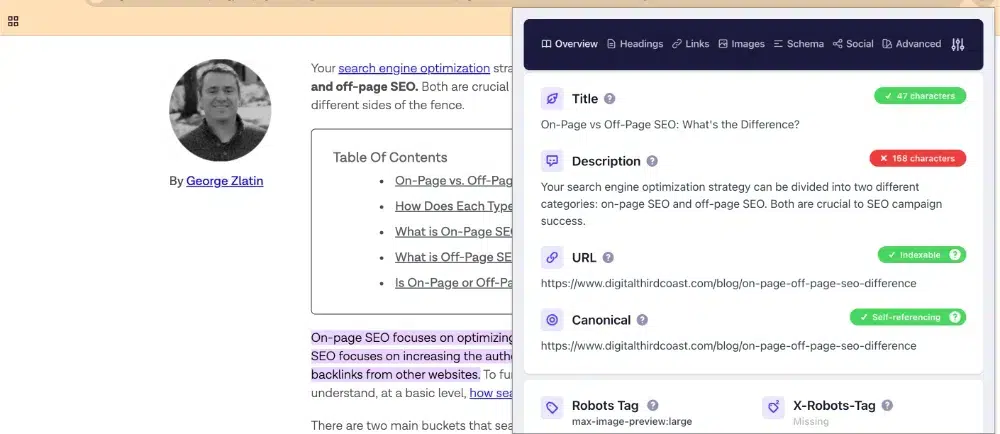
a good way to analyze some of those aspects is to use “Detailed SEO Extension“, just go over any page you want to check and open the extension, and there you will find their informative insights.
5. Check Your Competitors’ SERP Features
When you are learning how to do competitor analysis in SEO, analyzing your competitors’ SERP (Search Engine Results Page) features can help you find new opportunities to improve your visibility in search results. With SEMrush’s Organic Research tool, you can efficiently track which SERP features your competitors dominate. Here’s how to do it:
Steps to Analyze SERP Features with SEMrush’s Organic Research Tool
- Access the Organic Research Tool: Log in to SEMrush, navigate to the “Organic Research” tool, and enter your competitor’s domain into the search bar.
- Go to the “Positions” Tab: Once the results load, click on the “Positions” sub-category to view the keywords your competitor ranks for.
- Filter for SERP Features:
- In the results table, look for the “SERP Features” column that displays the features triggered for each keyword.
- Use the filter option to focus on specific features such as Featured Snippets, People Also Ask, Local Packs, or Video Carousels.
- Identify Competitor Opportunities:
- Review keywords where your competitors rank and dominate SERP features.
- Pay attention to high-volume keywords where they hold features like snippets, image packs, or FAQs.
- Spot Your Own Opportunities:
- Check keywords where your website ranks but your competitors hold the SERP features.
- These are prime areas to optimize your content, such as structuring for snippets, adding visuals, or creating FAQ sections.
- Export the Data: Export the list of keywords and SERP features to create a focused strategy for targeting those opportunities
Key SERP Features to Watch For:
- Featured Snippets: Answer-focused content that appears above the organic results.
- Local Packs: For location-based searches, often linked to Google My Business.
- People Also Ask: Questions related to your target keywords.
- Video Carousels: Popular for tutorial or product-related searches.
- Image Packs: Appear for visual-based queries.

6. Check Where Your Competitors Are Getting Traffic
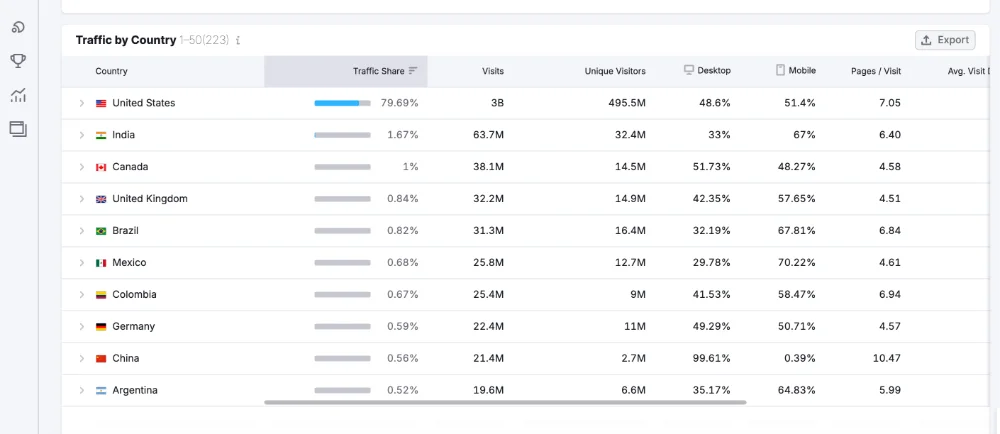
Understanding where your competitors’ traffic comes from is a key step in how to do competitor analysis in SEO. By analyzing their traffic sources and geographic distribution, you can discover new markets and opportunities for your own growth. Using SEMrush’s Traffic Analytics tool, particularly the Geo Distribution sub-tool, follow these steps:
How to Analyze Competitor Traffic with SEMrush Traffic Analytics
- Access the Traffic Analytics Tool:
- Log in to SEMrush and navigate to the “Traffic Analytics” tool under the Competitive Research section.
- Enter your competitor’s domain to generate their traffic insights.
- Go to Geo Distribution:
- In the Traffic Analytics dashboard, click on the Geo Distribution tab to view the geographical breakdown of their traffic.
- This section shows which countries drive the most traffic to your competitor’s website.
- Analyze Traffic by Country:
- Examine the top countries contributing to their traffic.
- Look for regions where your competitor is performing strongly, especially if they align with your target audience.
- Identify Opportunities:
- Spot countries with growing traffic potential where your competitor is active but you aren’t.
- Use this data to refine your SEO strategy, such as creating region-specific content or targeting local keywords.
7. Backlink Profile Examination
Examining your competitors’ backlink profiles is crucial to understanding their authority and identifying opportunities to strengthen your own SEO strategy. Backlinks are a significant ranking factor, and SEMrush’s Backlink Gap Tool makes it easy to analyze and compare backlink profiles. Here’s how you can use it effectively:
How to Analyze Backlink Profiles with SEMrush Backlink Gap Tool
- Open the Backlink Gap Tool:
- Log in to SEMrush and navigate to the “Backlink Gap” tool under the Link Building section.
- Enter your domain and up to four competitor domains to compare backlink profiles.
- Run the Comparison:
- Click “Find Prospects” to generate a report showing the backlinks your competitors have that you don’t.
- Pay attention to the “Gap” column, which highlights unique links your competitors benefit from.
- Evaluate Backlink Quality:
- Look at the Authority Score of the referring domains to determine the quality of backlinks your competitors are acquiring.
- Prioritize links from high-authority domains for your link-building strategy.
- Identify Common and Unique Backlinks:
- Use the “All Intersections” filter to see backlinks shared by multiple competitors.
- Switch to “Missing” to focus on backlinks they have, but you’re missing, to spot link-building opportunities.
- Target Valuable Backlink Sources:
- Export the data and prioritize domains that align with your niche, have high authority, and show strong relevance to your content.
- Reach out to these domains with compelling pitches, or create content that naturally attracts backlinks from these sources.

8. Social Signals and Online Presence
As an important part of understanding how to do competitor analysis in SEO. Social signals, like likes and shares, show how well competitors engage their audience on platforms like Facebook and Instagram. Analyze their post frequency, engagement levels, and popular content types.
Use tools like SEMrush’s Brand Monitoring to track mentions and measure how social activity drives traffic. Strong social strategies can inspire your efforts to boost visibility and engagement.
9. Analyze the User Intent of Your Competitors
Understanding your competitors’ user intent helps you create content that better aligns with what users are searching for. User intent can be informational, navigational, transactional, or commercial. Analyze your competitors’ content by looking at the keywords they target and the structure of their pages to determine which intent they focus on.
Use tools like SEMrush’s Organic Research to identify high-ranking keywords and review the type of content they use to satisfy user intent (e.g., blogs for informational queries or product pages for transactional intent)
Check out our detailed blog post to learn more how to do a user intent analysis.
Identifying A Target Audience
Understanding how to identify a target audience is crucial for any marketing strategy, as it allows businesses to tailor their messaging and product offerings to the right demographic. Start by analyzing your product’s appeal and use market research and customer feedback to gather insights about potential consumers’ interests and needs. Utilize demographic data such as age, location, and income level to refine your target audience, ensuring your marketing efforts are directed effectively.
Frequently Asked Questions
SEO competitor analysis is a vital strategy to understand your market position and refine your SEO efforts. Here, you’ll find answers to some pivotal questions about executing a meticulous analysis of your competitors in the SEO landscape.
What are the essential steps in conducting an effective SEO competitor analysis?
To conduct an effective SEO competitor analysis, begin by identifying your top competitors, analyzing their keyword strategy, inspecting the quality and quantity of their backlinks, reviewing their content, assessing their site structure and user experience, and monitoring their social media presence.
How can I find and identify my main SEO competitors?
You can identify your main SEO competitors by analyzing keywords relevant to your business and looking at who ranks highly for those terms. Also, utilize tools to discover who is competing for similar audience attention, considering both direct business competitors and websites that compete in search rankings.
What are the best methods to analyze my competitors’ backlink profiles?
Analyzing your competitors’ backlink profiles requires using specialized SEO tools that can inventory the links pointing to their websites. Look at the authority of linking domains, the relevance of linked content, and the backlink growth over time.
Which features should I look for in an SEO competitor analysis tool?
A robust SEO competitor analysis tool should offer features like keyword position tracking, backlink analysis, domain and page authority metrics, content comparison, and the ability to monitor social signals. It should provide comprehensive, actionable data that informs your SEO strategy.
How can I perform a competitive analysis for a local SEO campaign?
For a local SEO campaign, focus on competitors’ local keywords, Google My Business profiles, local citations, and reviews. Study how they optimize for local search factors, like NAP consistency across their web presence and local link-building tactics.
How do I create a comprehensive SEO competitor analysis report?
A comprehensive SEO competitor analysis report should encapsulate relevant data on competitors’ rankings, keywords, backlinks, content quality, and social media engagement. Present your findings in an organized manner, highlighting strengths, weaknesses, and actionable insights.
Conclusion
Mastering how to do competitor analysis in SEO is a critical step toward improving your strategy and staying ahead of the competition. By carefully examining your competitors’ strengths and weaknesses in areas like keywords, backlinks, and content, you gain valuable insights to boost your website’s performance in search results. The true power of how to do competitor analysis in SEO lies in using these insights to create a tailored strategy that sets your website apart and drives lasting success in your industry.
If you didn’t feel like you fully understood how to do competitor analysis in seo, don’t hesitate to check out our services and feel free to contact us for assistance!
Need a Digital Solution?
Get in contact now with Experts!
We answer calls 24/7!


![How to Do International SEO ? [ 2024 Checklist ]](https://organixmedia.com/wp-content/uploads/2024/01/day-office-travel-agency-768x475.webp)


